
17 August
How to Detect Water Leakage at Home Before It Becomes a Major Problem
How to Detect Water Leakage at Home Before It Becomes a Major Problem A small water leak may seem...

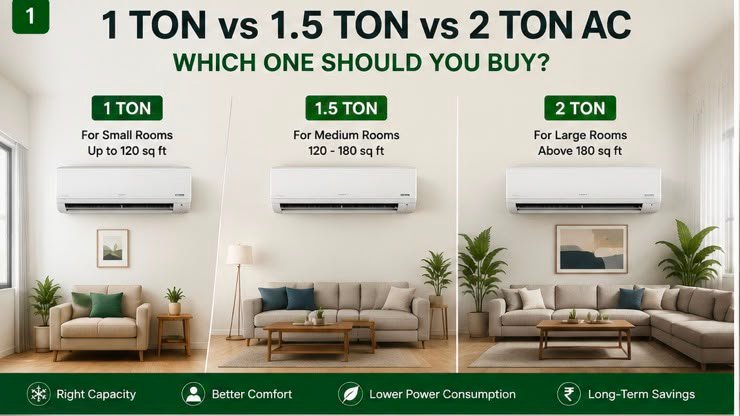
1 Ton vs 1.5 Ton vs 2 Ton AC: Which One Should You Buy?
One of the most common questions homeowners ask when buying an air conditioner is:
“Should I buy a 1 ton, 1.5 ton or 2 ton AC?”
There isn’t one answer that works for every home.
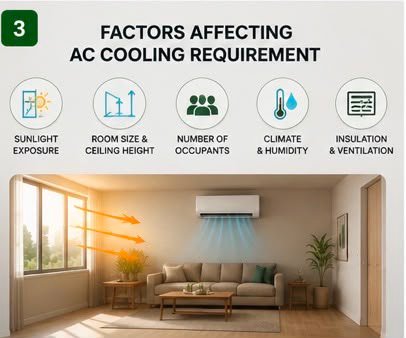
The right AC capacity depends on several factors, including room size, ceiling height, sunlight exposure, number of occupants, insulation, local climate and how frequently you use the AC.
Choosing the right capacity can help you achieve a better balance between cooling, comfort, energy consumption and purchase cost.
Let’s understand the difference.
⸻
What Does AC Tonnage Mean?
The term tonnage refers to the cooling capacity of an air conditioner.
It does not mean the physical weight of the AC.
Generally:
Higher tonnage = higher cooling capacity
For example, a 2 ton AC generally has greater cooling capacity than a 1 ton AC.
However, that doesn’t mean a 2 ton AC is automatically better.
The objective is to choose an AC with a capacity appropriate for your room and environmental conditions.
⸻
1 Ton AC — When Can It Be Suitable?
A 1 ton AC can be suitable for smaller rooms when the cooling requirement is relatively low.
It may be considered for:
* Small bedrooms
* Small study rooms
* Smaller living spaces
* Rooms with limited heat exposure
But room size alone isn’t enough.
You should also consider:
* Direct sunlight
* Ceiling height
* Number of people
* Windows and ventilation
* Heat generated by appliances
* Local climate
A small room with strong afternoon sunlight may have a higher cooling requirement than a similar-sized room that remains shaded.
⸻
1.5 Ton AC — A Popular Choice for Many Homes
A 1.5 ton AC is commonly considered for medium-sized bedrooms and living spaces.
It may be appropriate when:
* The room is moderately sized
* Several people use the room
* The room receives significant sunlight
* The AC is used for long periods
* The local climate is hot
However, don’t choose 1.5 ton simply because it is a popular capacity.
Your specific room conditions should still be considered.
⸻
2 Ton AC — For Higher Cooling Requirements
A 2 ton AC provides greater cooling capacity and may be suitable for larger rooms or spaces with higher heat loads.
It can be considered when:
* The room is large
* The ceiling is relatively high
* There is significant sunlight exposure
* Several people regularly occupy the space
* The room has a higher cooling requirement
But bigger isn’t always better.
Installing a much larger AC than necessary may increase the initial purchase cost and may not provide the best overall result.
⸻
Quick Comparison
AC Capacity Generally Considered For Important Considerations
1 Ton Smaller rooms Room size, sunlight and climate
1.5 Ton Medium-sized rooms Occupancy, sunlight and usage
2 Ton Larger rooms / higher heat loads Room conditions and cooling requirement
Important: These are general guidelines, not fixed rules. The appropriate capacity should be determined based on the actual cooling requirement of the room and the manufacturer’s specifications.
⸻
Why Room Size Matters ?
Room size is one of the most important factors when choosing AC capacity.
A larger room generally requires more cooling capacity than a smaller room.
But two rooms with the same floor area may still have different cooling requirements.
For example:
Room A
* Moderate sunlight
* Good insulation
* Few occupants
* Normal ceiling height
Room B
* Strong afternoon sunlight
* Poor insulation
* Several occupants
* Heat-producing appliances
Even if both rooms have a similar floor area, their cooling requirements may be different.
That’s why simply following a “tonnage by room size” chart isn’t always enough.
⸻
How Climate Affects Your Choice ?
Climate can significantly affect AC performance and cooling requirements.
Indian cities experience different combinations of:
* Temperature
* Humidity
* Sunlight
* Seasonal heat
A home in an extremely hot region may have a different cooling requirement from a home in a relatively moderate climate.
If you live in an area with very hot summers, consider the local climate when selecting your AC.
⸻
Sunlight Can Increase Cooling Requirements
Sunlight entering through windows can significantly increase the heat inside a room.
Rooms with:
* Large windows
* West-facing windows
* Direct afternoon sunlight
* Poor curtains or shading
may require more cooling than shaded rooms.
Good curtains, blinds and appropriate insulation can also help reduce heat entering the room.
⸻
Number of People Also Matters
People generate heat.
A bedroom used by one or two people may have a different cooling requirement from a living room regularly occupied by a larger family.
Consider the normal number of occupants when choosing an AC.
⸻
What About Inverter ACs?
Inverter ACs can adjust compressor operation according to cooling demand.
This can provide benefits such as:
* More consistent temperature control
* Potential energy savings under suitable operating conditions
* Comfortable long-duration operation
* Quieter operation in many models
However, actual performance depends on the specific model, installation, room conditions and usage pattern.
Don’t choose an inverter AC based only on the word “inverter.”
Compare the actual specifications, energy-efficiency information, warranty and expected running cost.
⸻
Don’t Forget Energy Efficiency
The purchase price is only one part of the cost of owning an AC.
If you use your AC regularly, electricity consumption can become a major part of the long-term cost.
When comparing models, consider:
Purchase Price
Electricity Consumption
Installation Cost
Maintenance
Expected Lifespan
A slightly more expensive energy-efficient model may sometimes make more sense for a household that uses AC for many hours every day.
⸻
Why Professional Installation Matters
Choosing the correct AC capacity is important, but installation is equally important.
Poor installation can affect:
* Cooling performance
* Energy consumption
* Drainage
* Refrigerant system performance
* Noise
* Reliability
The indoor and outdoor units should be installed according to the manufacturer’s requirements.
Electrical connections should also be handled appropriately.
Whenever possible, use an appropriately qualified professional for installation.
⸻
What Happens If You Choose an AC That Is Too Small?
If the AC capacity is insufficient for the room, it may struggle to maintain the desired temperature.
Possible signs include:
* AC running for long periods
* Room taking a long time to cool
* Poor comfort during peak summer
* Higher-than-expected electricity consumption
If you experience these problems, the issue may not always be the AC capacity. Installation, maintenance, refrigerant issues, room insulation and other factors can also affect performance.
⸻
What Happens If You Choose an AC That Is Too Large?
A much larger AC isn’t necessarily the best solution.
It can:
* Cost more initially
* Provide more cooling capacity than required
* Potentially affect comfort depending on the system and conditions
* Be an inefficient choice for the actual requirement
The goal isn’t to buy the biggest AC.
The goal is to buy the right AC.
⸻
Before You Buy: Ask These Questions
Before purchasing an AC, consider:
✔️ What is the room size?
✔️ How much direct sunlight enters the room?
✔️ How many people normally use the room?
✔️ What is the ceiling height?
✔️ What is the climate in your city?
✔️ How many hours per day will the AC operate?
✔️ Do you need an inverter AC?
✔️ What is the energy-efficiency rating?
✔️ Is professional installation available?
✔️ What warranty and after-sales support are available?
Answering these questions can help you make a more informed decision.
⸻
1 Ton, 1.5 Ton or 2 Ton — Which One Is Best?
There is no universal winner.
Choose around 1 ton when:
Your room and cooling requirement are relatively small and the environmental conditions are favourable.
Consider around 1.5 ton when:
You have a medium-sized room with moderate to higher cooling requirements.
Consider around 2 ton when:
You have a larger room or a significantly higher cooling requirement.
But remember:
The correct capacity should be based on the actual cooling requirement, not simply the size of your wallet or the biggest number on the product box.
For uncertain situations, getting advice from a qualified AC professional can be helpful.
⸻
Find AC Products and Services Through GrowMint
Choosing an AC is only the beginning.
After purchasing an AC, you may need:
Delivery
Installation
Maintenance
Repair
Replacement parts
This is where GrowMint’s Home Improvement Ecosystem aims to create a more connected experience.
GrowMint is being developed to bring home-improvement products and professional home services together on one platform.
Customers can discover relevant products and, where available, find suitable professionals for installation, maintenance and other home-service requirements.
One Home. Many Needs. One Growing Ecosystem.
Products + Professionals + Services for Your Home.
🌱 GrowMint — Cultivating Success.
Practical advice to help you choose products, maintain your home and find the right professional.
17 August
How to Detect Water Leakage at Home Before It Becomes a Major Problem A small water leak may seem...

17 August
Home Electrical Safety: 12 Things Every Family Should Know Electricity makes modern life more com...
17 August
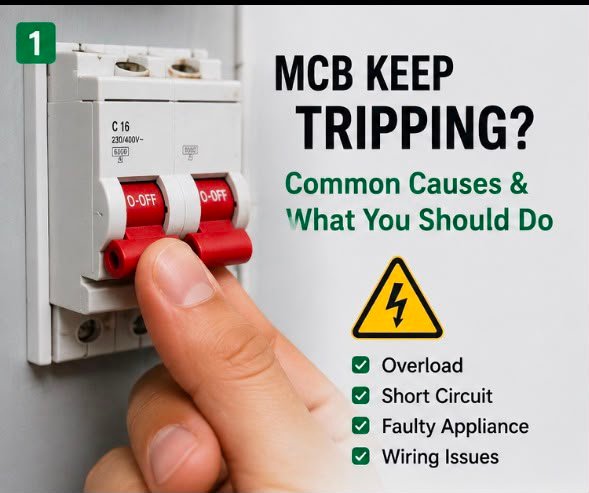
Why Does My MCB Keep Tripping? Common Causes and What You Should Do You switch on an appliance an...

17 August
How to Choose a Reliable Electrician for Your Home Electrical work is one area where choosing the...

17 August
How to Choose the Right Air Conditioner for Your Home. Buying an air conditioner is an important...
Need Help?
GrowMint Digital Private Limited :- Araji No- 928, Lodhan, Shivpur, Varanasi, Uttar Pradesh-221003
Open in Maps support@growmintindia.com +91-0542657345